
That Stain on Your Ceiling Is Shaped Like Florida — and It's Growing
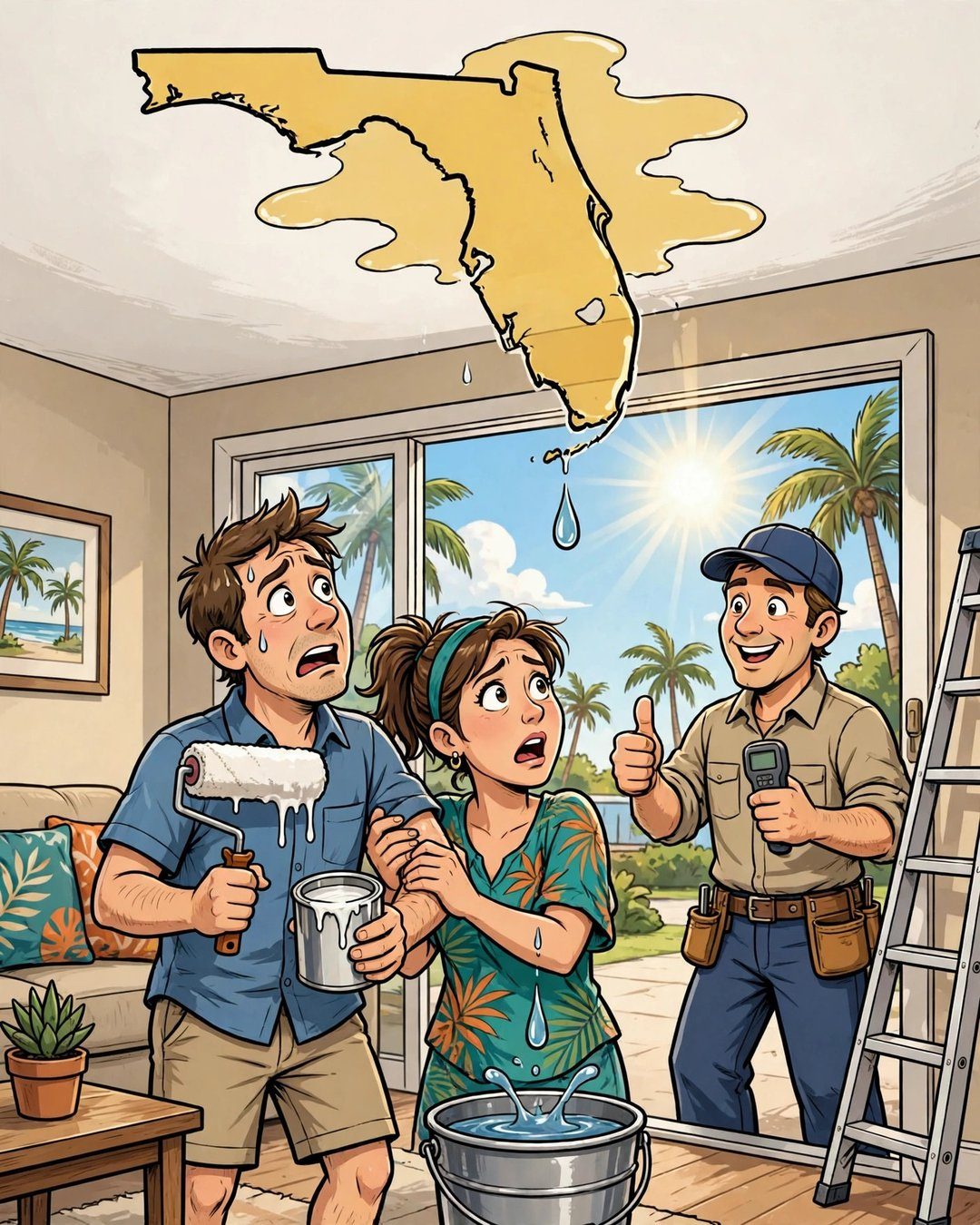
It started as a faint ring the size of a coin. Then a coffee cup. Now it has its own zip code, a yellow-brown edge — and last week the paint in the middle started to bubble.
I know the temptation. Ten minutes, one coat of paint, problem "solved." Here is the honest truth: paint does not stop water. It just closes the curtain while the leak keeps working above your ceiling — soaking the drywall, feeding mold you cannot see, and turning a small fix into a ceiling replacement.
In South Florida homes, a growing ceiling stain usually comes from ONE of three places:
- 🌧️ THE ROOF — if the stain grows after heavy rain and sits under the roof line, water is getting in from above. In our storm season, even a small failed flashing or a cracked tile can drip for weeks before it shows inside.
- 🚿 PLUMBING ABOVE — a bathroom, a water heater pan, or a supply line on the floor above. Tell-tale sign: the stain grows when somebody showers or the tub drains — rain or no rain.
- ❄️ YOUR AC — the Florida special. Your air conditioner pulls gallons of moisture out of the air every day, and that water drains through a condensate line. When that line clogs, the pan overflows — usually right over a ceiling. Tell-tale sign: the stain grows on hot, HUMID days when the AC runs nonstop, with no rain and nobody showering.
THREE FREE TESTS before you touch a paint can
- TOUCH IT — dry and hard is an old stain telling history. Soft, damp, or spongy means ACTIVE water right now. Soft drywall is already losing — it needs to come out, not get painted.
- WATCH THE TIMING — check the stain after a storm, after a shower, and after a full day of AC. When it grows tells you WHERE it comes from better than any guess.
- TRACE THE RING — a darker edge that keeps moving outward week to week = the leak is alive. Take a photo today with your phone and compare in a week. No change and bone dry? Then — and only then — is it a paint job.
What you can safely do yourself
- Photograph and date the stain so growth is a fact, not a feeling
- Check your AC condensate drain — if the pan is full or the line is clogged, that is your first suspect in summer
- Once the source is FIXED and the ceiling is fully dry, seal the stain with a stain-blocking primer first — regular paint lets the ring bleed right back through in a month
Where to STOP — honestly
- NEVER just paint over a damp or growing stain — you are sealing moisture and mold inside your ceiling
- Bubbling, sagging, or cracking paint means the drywall is soaked through — that section needs replacement, not primer
- A stain that grows fast, drips, or sits near a light fixture — water and electricity do not negotiate. That is not a weekend project
- The source is the roof, a pressurized water line, or the AC unit itself — those belong to a licensed roofer, plumber, or AC tech, and I will tell you so straight
The fix order matters: FIND the source, STOP the water, DRY it out, and only then repair the ceiling and paint. Skipping to step four is exactly how a small stain becomes a new ceiling.
Honest pricing: coming out to find the source, test the moisture, and tell you which of the three it is — that is usually a first-hour job. Cutting out and replacing a soaked section of ceiling drywall depends on the size — send me a photo of your stain and I will give you a straight number before I come. My rates are simple — first hour $80, then $60 per hour after that, minimum $80 per visit. Zelle or cash after the work is done.
💡 SMART MOVE: put a strip of painter's tape at the edge of the ring tonight and write the date on it. If the stain crosses your tape line this week, the leak is alive — and now you have proof, not a guess.
Got a job like this?
Text a photo of the problem — Alex replies with a straight price and the earliest visit time.
1 hour $80 · 2+ hours $60/hr for every hour · $80 minimum · Zelle or cash after the work